ANNOUNCING BRAN NEW PROJECT - DARK SKY SOCIETY
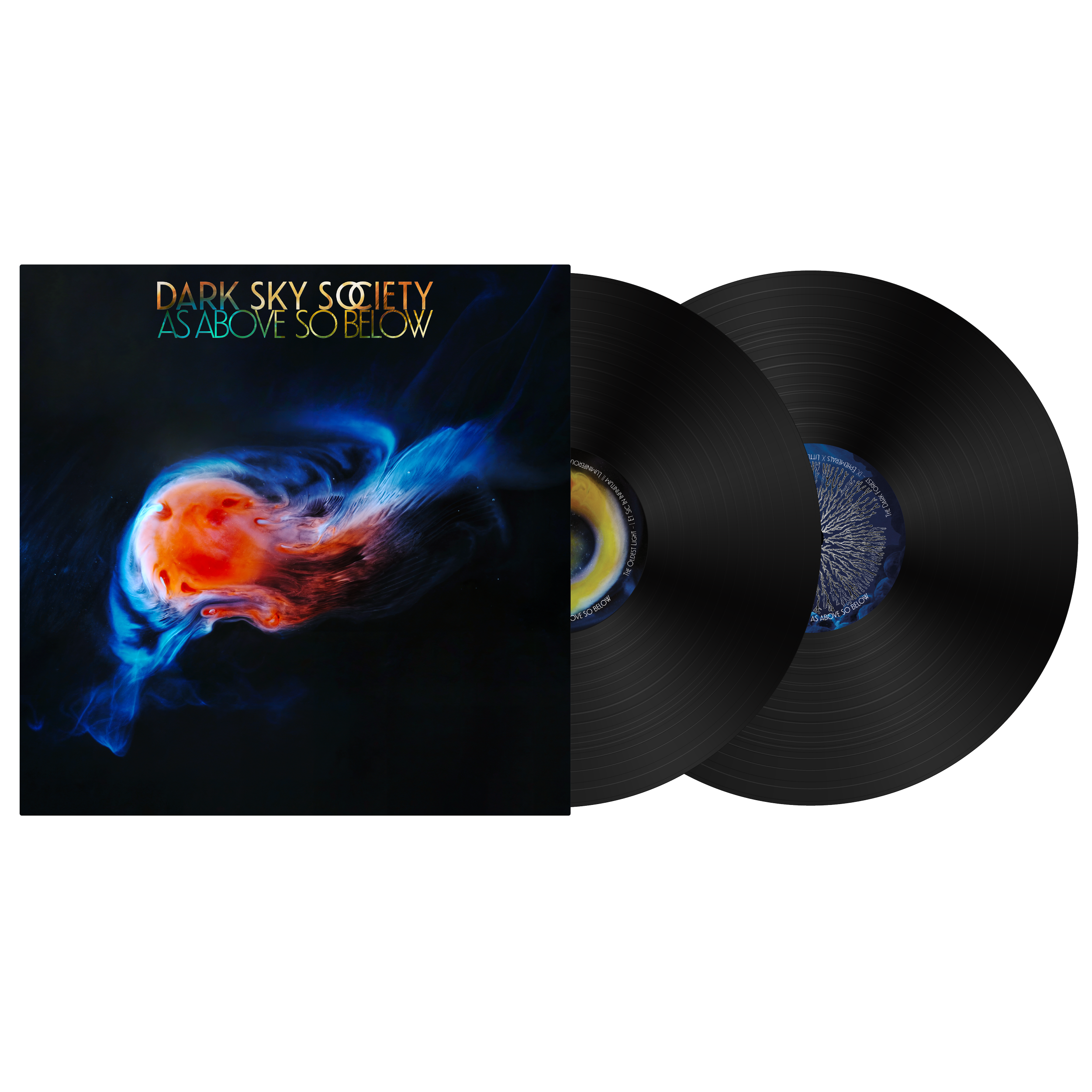
Not to do anything halfheartedly, Montreal’s newest artist collective Dark Sky Society today announce their existence as an artist ensemble and society - and the forthcoming release of their debut album & premiere live show - with their first single “First Law of Thermodynamics”.
The album, As Above So Below, created, composed and directed by the members Dark Sky Society, presents a massive 57 minute composition also to be experienced as a visual album / audiovisual experience. The album and film explore simultaneous multiple perspectives: the cosmological and the microscopic, hand-made and computer generation, digital and analog, large ensembles and individuals, multiple tonal centres and multiple rhythmic timeframes.
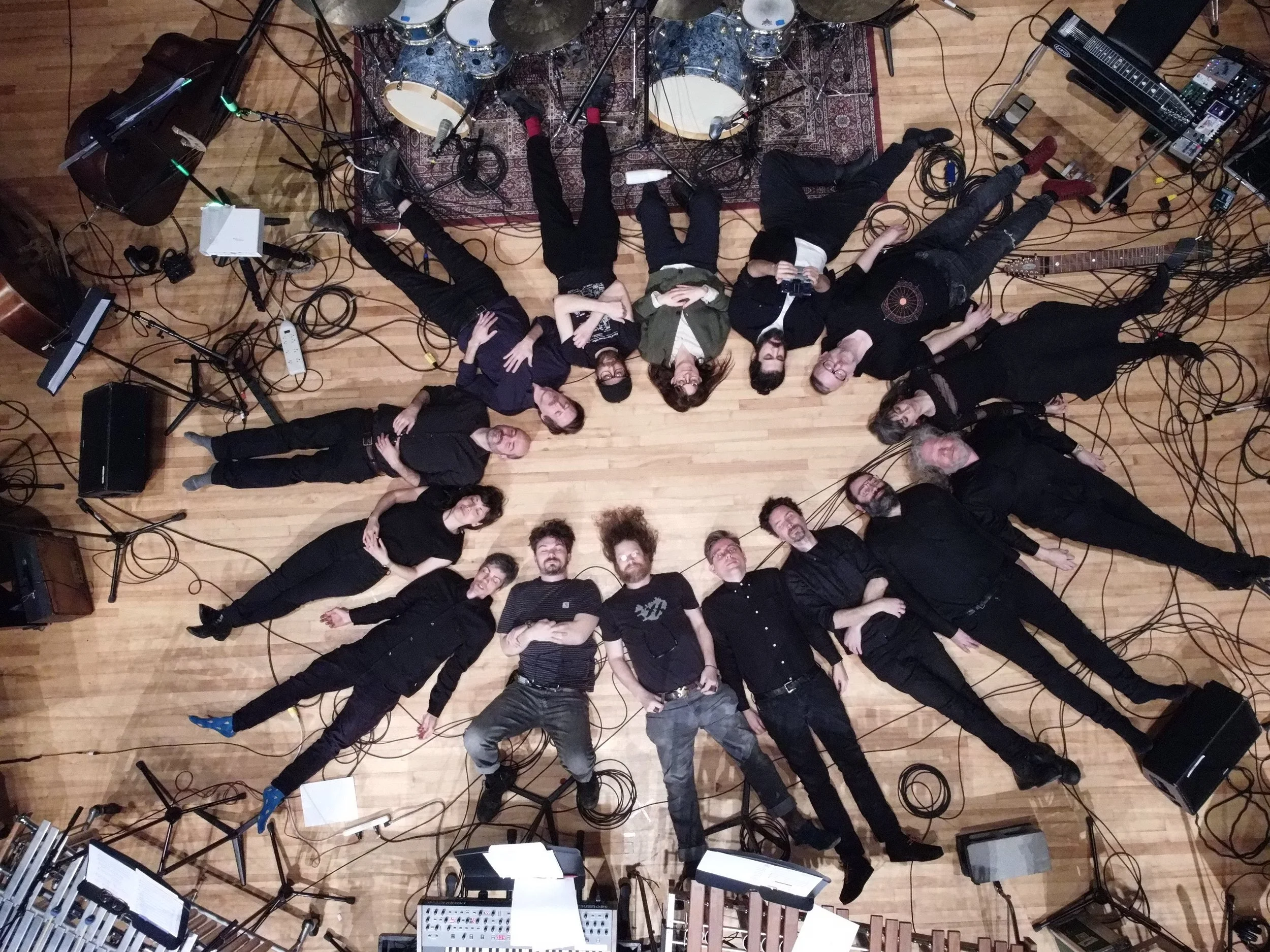
Dark Sky Society is led by Vid Cousins and William Hesselink, made up of 14 musicians and 5 filmmakers and supported by Ryhna Thompson and the team at Envision. While the artists involved have collaborated in many different forms over the years, As Above So Below is the debut work of the Society as a whole.
Regarding the debut single “First Law of Thermodynamics”, the band explains:
”This piece started as a late night piano sketch made at a cabin in Low, Quebec while little kids slept upstairs. They were fascinated with the contrast between the rhythmic shifting that came from subtle, occasional additions to a constant arpeggio while a clear, multi-register unison progression developed over top.”
Throughout their somewhat unconventional production process, small, direct ideas can drift in all kinds of unexpected ways. Before long their late night piano sketch had evolved into a grand arrangement and the harp and piano arpeggios became a shifting structural framework for larger and longer contrapuntal themes in brass, woodwind, monosynth, and pedal steel. French horn melodies, harmonized with trombone and built into a soaring duet pulled on the melodic motifs of the larger opus.
"Energy moves from one place to another, from one form to another. Building blocks can coalesce unpredictably and evolve toward a conclusion derivative of, and yet new and unlike, what has happened before.”
The idea of the society has been in the making for a decade. Its origins are the product of the early 2000s Montreal music scene. The city’s music community had this incredible energy and urgency and was a magnet for all kinds of creatives. There was this amazing DIY ethos that made it feel like groups of friends making art for art’s sake was a viable pursuit. Society leaders, Vid & William, would go to shows and experience these incredible, bizarre, long-form compositions and it always felt like a family reunion.
Dark Sky Society came out of this spirit where making something with friends became the point. It began as ideas from Vid and William and then quickly turned into a fun way to hang out with friends (Keiko and Nathan) and then snowballed as they started recording. Recording led to more ideas, which led to more recording, which led to more ideas. That core was surrounded with acoustic instruments like guitar, double contrabass, harp, brass, bass saxophone, flute and vintage mono and polysynthesizers.
The songs would start from some sketch of a part that was fun to play because of its challenge and because it was meditative in some aspects. Often that was because it was polyrhythmic and you would have to be 100% present to be able to perform it. When you lock into that with a group of friends, time stops and you can feel incredibly fortunate, like you have been given this gift of communication on a secret, rare frequency.
The visuals extended from that. Hours spent hanging out and recording and mixing were often accompanied by great books on Cosmigraphics and The Liberal Arts (in particular The Quadrivium, which are the ancient arts of numbers: (Geometry, Arithmetic, Astronomy and Music). When the pandemic forced Vid and William apart they dug into the idea of extending their sound project into the visual realm. This wasn’t a new idea for them, as both of them had been involved in projects where a film component was at the core and it was very common in Montreal with many people doing inspiring work.
They reached out to four artists whose work they loved who worked in contrasting media: Tracy Maurice (Chemical macrophotography), David Barlow-Krelina (3D digital animation), Cielle Graham (Hand-drawn illustration) and Corinne Merrell (Miniatures and Maquettes) and together developed a process they called “circular generation” to mirror what they felt they were doing musically. Ideas would be passed around and combined and built. The hope was that, in the end, they would get to participate in the creation of something much grander than anything they could have made on their own.